Aviation
Leading the way toward cleaner skies, aviation stakeholders are exploring zero-emission technologies for their fleets.

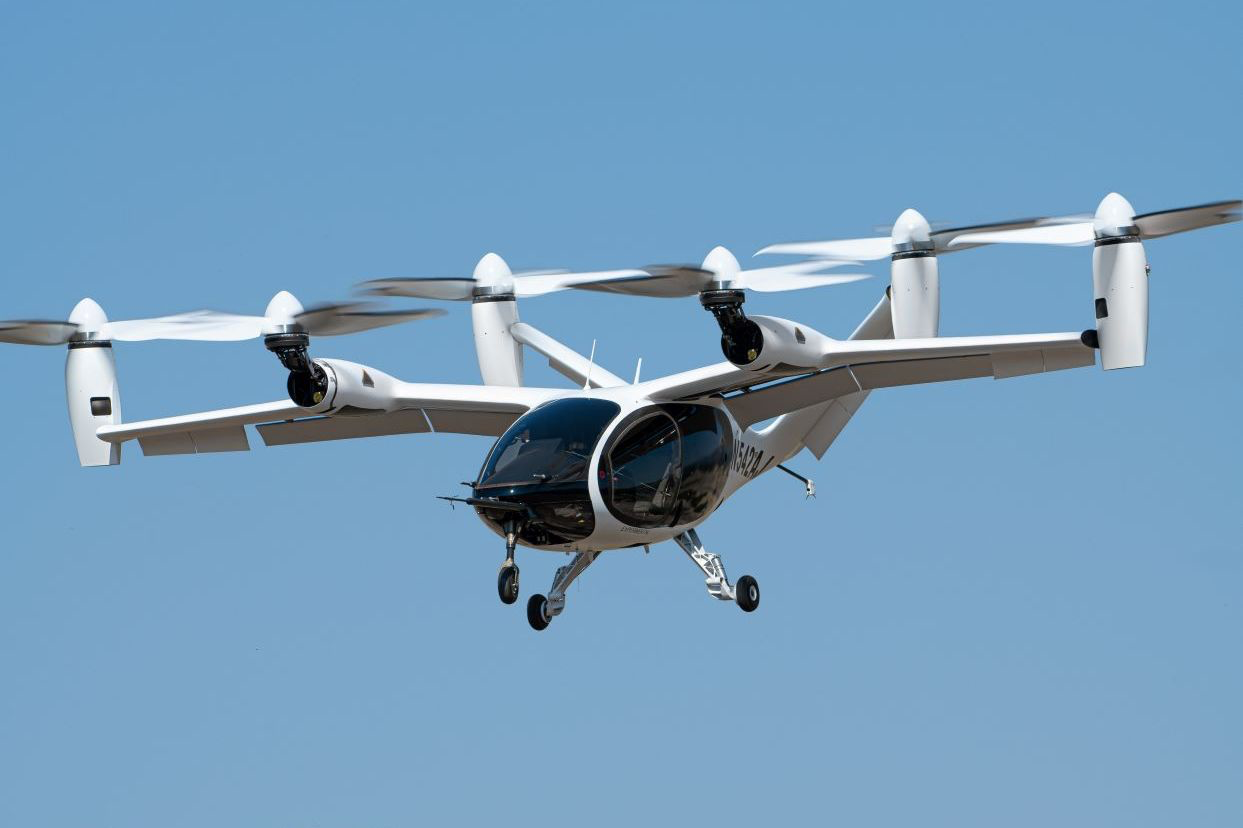
From regional airliners to emerging eVTOLs, aircraft fleets are essential for mobility, connecting communities and businesses around the world,and are leading the way toward zero-emission aviation technologies through innovation and adoption of cleaner energy solutions.
CTE collaborates with aircraft operators and aviation stakeholders to support the planning, funding, and deployment of zero-emission aircraft and related infrastructure. Our team delivers technical expertise, grant strategy, regulatory insight, and project management to help organizations address operational challenges, enhance performance, and advance the adoption of sustainable aviation technologies.
.png)
.png)
Smart Deployment Services
CTE helps the fleet owner develop a project management plan to guide their zero-emission vehicle project. CTE collaborates with the fleet owner to define project objectives and scope, identify resources, and develop a detailed project schedule and implementation plan. The project plan is then presented at the project kickoff meeting held with key team members and stakeholders.
CTE’s modeling suite uses our proprietary engineering and analysis tools to develop an independent operational analysis that helps the fleet owner match ZEV technologies to service requirements.
Vehicle & Route Modeling – CTE gathers data on routes, technical specifications of the vehicle and charging or refueling equipment, and operational assumptions. This route and vehicle information is used to model the vehicles’ duty cycles, simulating vehicle performance on selected routes. The process also ensures that adequate power and energy storage specifications are met and inform fueling and charging strategies.
Fueling Infrastructure Modeling – For battery electric vehicle deployments, CTE defines charging scenarios to model electricity consumption and assess charging equipment requirements. Modeling results for electricity inform infrastructure procurement and operational decisions. For fuel cell electric vehicle deployments, CTE will determine daily hydrogen consumption and station throughput requirements given the fleet owner’s refueling window. CTE will also estimate a station scale-up plan as a starting point for fueling station design discussions.
Fuel Cost Modeling – CTE examines electric utility rate structures to estimate the annual cost of energy to charge battery electric vehicles. CTE works with the fleet owner and local utility providers to determine rate schedules that would be the most advantageous for supporting battery electric vehicle deployments. For fuel cell electric vehicle deployments, CTE will identify likely sources of hydrogen supply, evaluate hydrogen supply reliability, and estimate the cost of hydrogen.
Based on the modeling outputs, CTE helps fleet owners develop vehicle and infrastructure technical specifications to meet service requirements. The specifications can then be used as part of a competitive procurement or to develop a contract with a named vendor. CTE also provides advisory services throughout the design and build process.
If the fleet owner chooses to select a vehicle, charging, hydrogen refueling station, or facility modification vendor through a competitive procurement, CTE supports the fleet owner in the procurement process, including the preparation of Requests for Proposals (RFP), technical evaluation of proposals, vendor demonstrations, site visits to vendor facilities, vendor negotiations, and contracting.
Before the delivered vehicles enter service, CTE runs a series of tests to validate the expected levels of vehicle performance. If there are any discrepancies between the modeled and the tested performance, CTE will work with the fleet owner to analyze these discrepancies and reevaluate operational decisions before the fleet owner places the vehicles into service.
CTE collects operational data to generate a series of Key Performance Indicators (KPIs) to measure benefits and ensure the vehicles perform as expected. KPIs can be used to compare ZEV performance against the fleet owner’s current vehicle fleet by measuring and reporting mileage, fuel consumption and costs, maintenance costs, battery degradation, and efficiency and range under varying conditions. This information is used to assess energy savings, cost savings, and emissions reductions to measure performance against expectations and goals and to validate the operating model. Continuous KPI monitoring establishes an understanding of the technology that can be applied to future ZEV procurements, deployments, and long-range fleet management planning.
CTE employs a project management methodology specifically designed for zero-emission vehicle deployments and augmented by established project management, administration, reporting, and controls processes. CTE provides technical advisory services throughout the project to ensure that fleet owner staff understand the differences in technology and the best practices for deploying and operating ZEVs. CTE’s Smart Deployment Methodology is designed to address all aspects of a successful implementation including planning, requirements analysis, specifications, workforce development requirements, operator and maintenance training, testing and validation, and performance evaluation.
From identifying the right opportunity to managing post-award requirements, CTE provides full-service grant support tailored to your needs. Our team combines policy insight with deep technical expertise to develop competitive applications that align with funding priorities. We de-risk projects through data-driven strategies for technology selection, deployment modeling, procurement planning, and validation—positioning your project for long-term success.
Transition Planning
Airport fleets include a wide variety of vehicles. CTE maintains a comprehensive database of the evolving zero-emission vehicle (ZEV) options across all vehicle types and technologies. Our database includes key details like battery capacity and range to help you identify viable ZEV options for your fleet.
To determine the range capability your fleet needs, CTE conducts a service assessment on duty cycles for all vehicles in the fleet. If available, CTE will leverage your existing telematics platform to determine each vehicle’s use conditions, including factors such as specific routes and schedules or emergency use needs. These insights provide evidence to establish how available ZEVs will fit into your fleet while minimizing operational disruptions.
Not all ZEVs will meet the needs of your fleet. CTE evaluates both:
Feasibility: Can a ZEV handle daily operations, including range, energy needs, and auxiliary functions (e.g., heating, lifts, or emergency response)?
Suitability: Are ZEV models available that can meet fleet requirements with proven reliability and reasonable costs? CTE assigns a Suitability Score to each vehicle type based on availability, reliability, safety, and cost—ensuring only practical recommendations.
CTE can help you navigate the evolving regulatory landscape, including potential exemptions, to comply with applicable regulations, including CARB’s Advanced Clean Fleets regulation for government fleets.
CTE creates a replacement schedule for your existing internal combustion engine (ICE) vehicles with ZEVs based on four primary factors:
• Asset Replacement Schedule: Is the vehicle ready for replacement based on age, mileage, or hours?
• Duty Cycle Feasibility: Can the replacement ZEV feasibly meet the daily duty cycle?
• Vehicle Availability and Suitability: is the ZEV commercially available and is it a suitable replacement?
• Transition Goals: What strategies allow the fleet to meet its transition goals and timeframe while complying with regulations?
CTE estimates your fleet’s future fuel and energy needs and determines the required charging or refueling infrastructure to support ZEVs. This includes:
• Identifying the number and type of chargers or hydrogen stations needed
• Evaluating space, cost, and operational constraints
• Forecasting electricity or hydrogen costs and potential savings
CTE also models charge management strategies to help reduce utility costs.
Quantifying the emissions reduction benefits is an important tool to build support for your decarbonization plan. CTE can model the emissions savings for different transition pathways to support decision-making.
Beyond identifying the charging or refueling equipment needed, CTE provides implementation phase recommendations and analyzes the existing utility service capacity to determine if upgrades are needed. CTE can support discussions with your utility based on the forecasted future needs of the fleet and provide guidance on facility upgrades, timelines, and costs, including the safety upgrades required for maintaining hydrogen fleets.
Since internal combustion engines (ICE) and zero-emission vehicles have different maintenance requirements, they generally have different maintenance costs associated with them. CTE examines each technology’s related and analogous maintenance costs per mile or per hour as reported from real-world deployments to apply to the vehicle usage and estimate expected changes to vehicle maintenance costs as the fleet transitions.
For a resilient ZEV fleet, reliable backup power is essential. CTE conducts high-level assessments to identify the best infrastructure solutions for maintaining operations during emergencies and reducing strain on the grid. This includes evaluating backup generators, solar power, and battery storage systems at fleet facilities. Taking into account space, power capacity, cost, and operational constraints, CTE provides strategic recommendations to ensure uninterrupted fueling and charging, keeping your fleet prepared for any situation.
Switching to ZEVs impacts both operating and capital costs. While fuel and maintenance costs are often lower, upfront investments can be high. CTE provides a comprehensive cost analysis over the lifetime of your fleet transition. Additionally, funding and grant opportunities may be available, and CTE can assess and recommend opportunities to pursue. CTE provides these insights for informed decision-making and planning in comparison to the benefits of each transition scenario.
Ready to Get Started?
CTE is here to help successfully plan, deploy, and monitor your fleet. We want to hear from you!
.png)