Battery State of Health & Best Practices



Project Overview
Battery degradation poses a significant challenge to widespread advanced technology vehicle adoption due to costly replacements and impacts to reliability and service planning.
This project seeks to establish best practices for measuring battery state of health. Additionally, by analyzing real-world data and identifying key factors affecting battery health, we will also develop proven best practices to extend battery lifespan, reduce operational costs, and improve fleet reliability through predictive maintenance and charging schedules.

Why it Matters
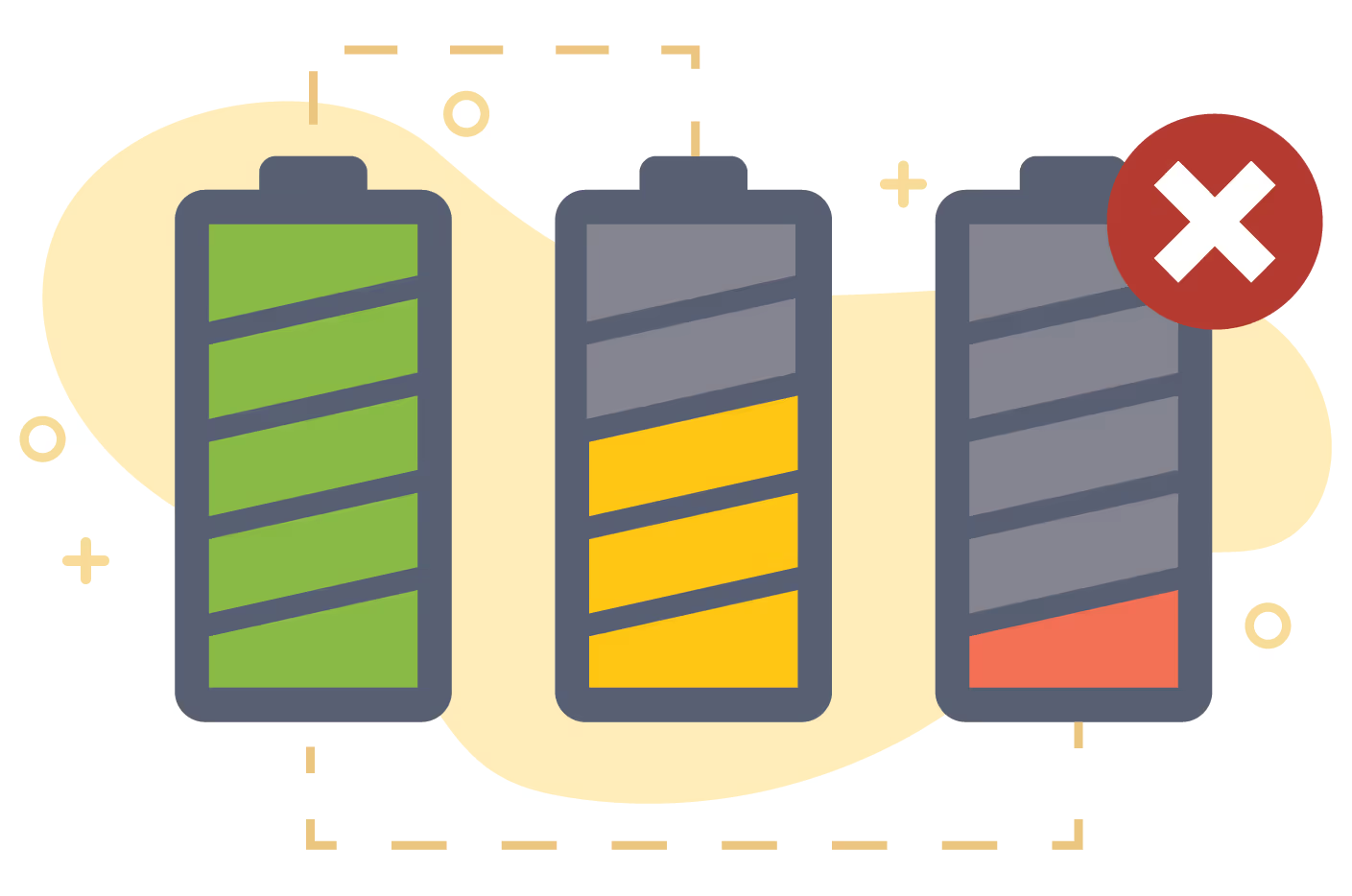
Batteries are the most expensive component of an advanced technology vehicle.
Extending their life means fewer replacements and lower costs.
Unplanned downtime disrupts transit services.
Smarter battery management keeps buses on the road.
Charging, operations, and climate all impact battery health.
Operators need data-driven strategies to optimize performance.
Project Milestones
Best practices guide for
tracking and improving
battery health
Actionable
recommendations for
extending battery lifespan

Data-driven insights on
battery performance
trends
Project Partners
This project is led by CTE in collaboration with The Ohio State University’s Center for Automotive Research.


“By developing robust battery monitoring methodologies and best practices, we empower transit agencies to optimize maintenance strategies and improve vehicle uptime.”


Recent TVIDC News:


Contact Us
Media & Press Relations
Kate Mason
Director of Communications
kate@cte.tv
TVIDC Project Manager
Jackson Danis
Engineering Consultant
jackson@cte.tv