Driving Zero-Emission Freight Forward: CTE Joins Rutgers and NJEDA Hydrogen Truck Pilot at Port Newark
The future of clean freight is arriving at the Port of Newark.
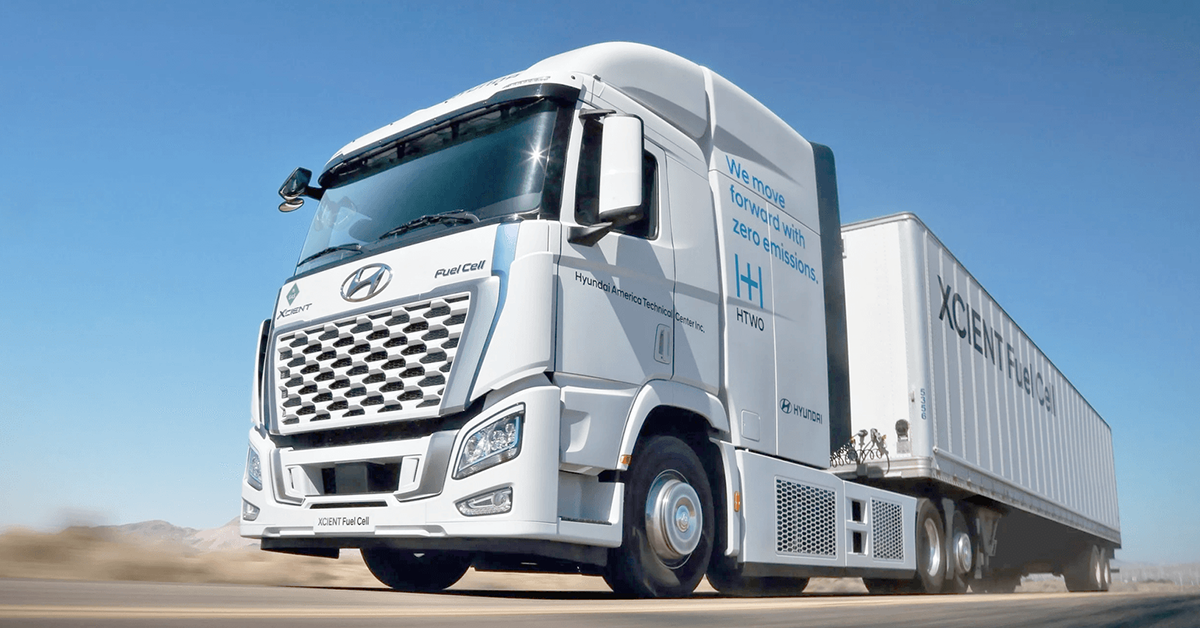
Rutgers University’s Center for Advanced Infrastructure and Transportation (CAIT) announced a $13 million award from the New Jersey Economic Development Authority (NJEDA) to launch a groundbreaking hydrogen truck pilot. Working alongside project partners Public Service Enterprise Group (PSEG), Hyundai Motor America, the Port Authority of New York and New Jersey, and the Center for Transportation and the Environment (CTE), Rutgers will deploy six hydrogen fuel cell electric trucks to serve drayage operations at one of the busiest container ports in the United States.
Drayage trucks — responsible for moving shipping containers short distances from ports to warehouses, rail yards, and distribution centers — are critical to supply chain efficiency but are also among the most polluting vehicles on the road. This pilot has the potential to prove hydrogen’s viability in some of the toughest operating environments for heavy-duty trucks.
While earlier initiatives like NorCal ZERO demonstrated the technical feasibility of hydrogen fuel cell trucks in regional freight service, this pilot is among the first to embed hydrogen-powered drayage vehicles directly into daily operations at a major East Coast container port—generating the port-specific performance data needed to support scalable deployment nationwide.
CTE’s Role: Measuring Performance, Building Confidence
CTE will support the project by analyzing current drayage operations, performing fuel cell vehicle and hydrogen fueling requirements analysis, and establishing Key Performance Indicators (KPIs) for the hydrogen trucks. Once the vehicles are deployed, CTE will collect and evaluate 12 months of operational data — tracking metrics like fuel consumption, maintenance costs, downtime, and port utilization.
This rigorous data collection will provide stakeholders with a clear, data-driven picture of hydrogen’s benefits and challenges in freight operations. It will also build the knowledge base needed to expand hydrogen truck adoption across other ports and freight corridors in the U.S.
“Establishing clear performance benchmarks based on current drayage operations is essential to demonstrating that hydrogen trucks can meet the real-world demands of port logistics,” said Niki Rinaldi El-Abd, Senior Managing Consultant at CTE.
Why This Matters
- Scaling zero-emission freight: Ports are among the hardest sectors to decarbonize. Proving hydrogen trucks work in Newark can unlock similar deployments in Los Angeles, Houston, Savannah, and beyond.
- Supporting economic growth: The project strengthens New Jersey’s position as a hub for hydrogen innovation, workforce training, and advanced transportation technology.
- Data to drive investment: The findings will give industry and policymakers the confidence to make informed investments in hydrogen-powered freight.
As freight demand continues to grow, CTE is proud to partner on this first-of-its-kind pilot. Together with Rutgers, NJEDA, PSEG, Hyundai, and the Port Authority of New York and New Jersey, we’re building the case for clean, scalable, and sustainable freight solutions. This project further expands CTE’s growing portfolio of port-focused work, which includes transition planning with South Carolina Ports, a technology pilot in Los Angeles, and grant administration for the Port of Oakland, and broader efforts to advance hydrogen fueling and zero-emission drayage operations at ports across the country.
For more on CTE’s work with Ports, visit cte.tv/markets/ports-marine or contact Gary Hsueh, Marine Ports Market Lead, at gary@cte.tv; for insights on our work with Commercial Freight, visit cte.tv/markets/commercial-private-fleets or reach out to Alexis Hedges at alexis@cte.tv.