Authored by Grace Leslie, Rail Market Lead
The freight rail system in the United States occupies a unique position in the nation’s transportation landscape. Every day, railroads move raw materials, consumer products, agricultural goods, and industrial equipment across the country. Freight railroads are the most fuel-efficient way to move freight over land and produce significantly less emissions compared to freight trucking.
However, U.S. freight railways are still a major source of pollution. Nearly all freight locomotives in the United States still rely on diesel fuel which contributes to climate-warming emissions and local air pollutants such as nitrogen oxides (NOx) and particulate matter. These impacts are especially concentrated in rail yards, ports, and freight corridors, many of which are located near densely populated communities.
As freight demand continues to grow, the challenge is not whether rail should play a role in a lower-emissions future, but how the industry can build on its existing efficiency advantages while addressing its remaining environmental footprint.
A Look Back: Understanding the Role of Diesel in Today’s Freight Rail System
While electric rail technology has existed since the late 19th century, diesel power became dominant in U.S. freight rail only in the mid-20th century. The world’s first electric rail system debuted in 1879, nearly five decades before the first diesel locomotive, yet diesel ultimately prevailed in the United States. Steam locomotives remained dominant for most freight service into the early 20th century, while electric rail was applied selectively in urban systems, terminals, tunnels, and high-traffic corridors. The eventual transition away from steam and the limited expansion of electric rail was driven less by technical limitations than by policy and market dynamics. Following the Federal-Aid Highway Act of 1956, passenger rail declined, freight rail remained privately owned, and diesel emerged as the most readily available and cost-effective option. Unlike Europe and Japan, the United States never pursued a coordinated national strategy to electrify or modernize its rail system, allowing diesel infrastructure to become deeply entrenched.
That legacy continues to shape today’s freight rail market. Diesel locomotives rely on a finite, increasingly costly fuel source and contribute to climate pollution and harmful local air emissions. As economic, environmental, and public health priorities evolve, this long-standing reliance on diesel no longer aligns as cleanly with the needs of a modern freight system, creating both urgency and opportunity for change.
Where Emissions Reductions Can be Most Effective in Rail
When viewed through an emissions-reduction lens, two strategies stand out for how the freight rail industry can most effectively reduce emissions:
1. Investing in Rail and Expanding its Role in Freight Movement
Due to lower friction and the prevalence of diesel-electric train engines, rail freight is 3-4x more fuel-efficient per ton-mile than trucking. Moving more goods by rail, as opposed to long-haul trucking, inherently lowers greenhouse gas emissions and reduces fuel consumption across the freight system as a whole.
Investments that improve rail capacity, reliability, and intermodal connections enable railroads to absorb additional freight demand that might otherwise move by truck. This shift can deliver immediate environmental benefits without requiring a full transformation of locomotive technology. Regardless, hydrogen and battery electric technologies should be considered as part of any rail investments to enhance the benefits of rail versus other modes of transportation.
2. Prioritizing Rail Yards for Decarbonization
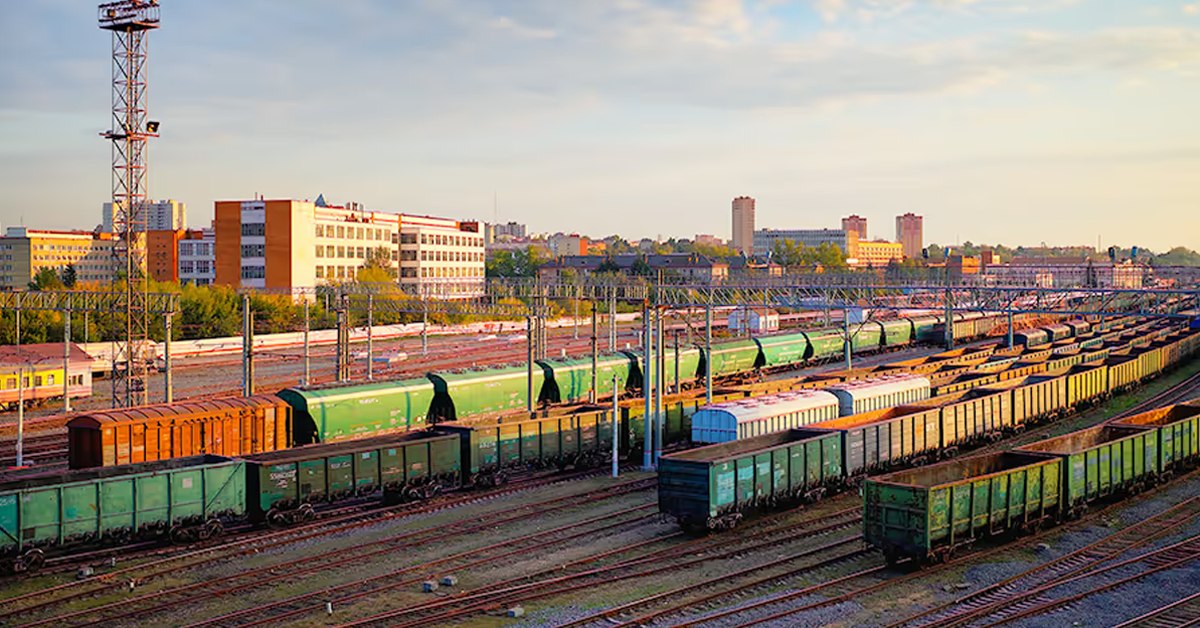
Several characteristics of rail yards make them especially well-suited for early zero-emission adoption when approached strategically. Rail yard operations are highly repeatable and easier to model than many other transportation modes. Switcher locomotives, container handling equipment, and other yard-based equipment generally operate over short distances, return to the same locations daily, and require less range than long-haul freight locomotives, making them strong candidates for battery-electric or hydrogen fuel cell technologies.
Reducing diesel exhaust in and around rail yards delivers immediate public health benefits for workers and nearby residents. As a result, public agencies and port authorities have already begun factoring these benefits into planning, permitting, and long-term capital investment decisions.
How CTE Supports the Rail Market’s Transition
CTE supports rail operators, public agencies, port authorities, and policymakers by helping them:
- Evaluate where zero-emission technologies make the most operational and financial sense today
- Develop phased transition plans that align with long asset lifecycles and capital planning realities
- Quantify emissions reductions, costs, and infrastructure needs across zero-emission fleets
- Monitor and apply for grant opportunities that help offset increased capital costs associated with the new technologies
Rather than advocating for one-size-fits-all electrification, CTE focuses on practical, data-driven pathways that reduce risk, improve air quality, and position rail organizations for long-term resilience in a changing energy economy.
Lowering emissions from freight rail begins with deploying zero-emission technologies in the right places while expanding rail’s role in the broader freight system. By prioritizing places like rail yards for decarbonization and enabling rail to take on more freight demand from trucking, the industry can make meaningful progress toward emissions reduction.
The transition will be incremental, complex, and market-specific, but with the right partners and planning, it is well within reach.