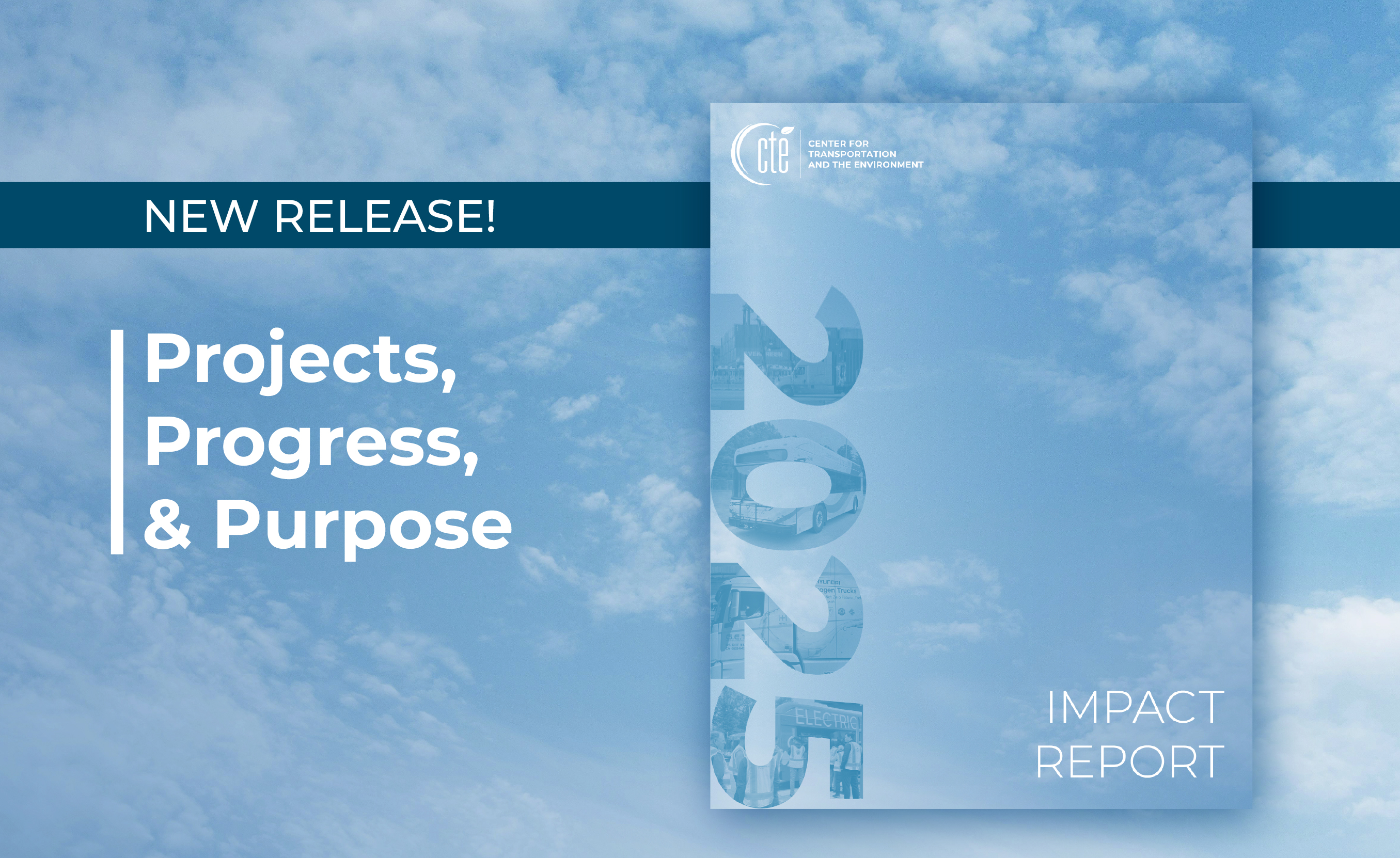
At the Center for Transportation and the Environment (CTE), we know that lasting change only occurs when clean technologies succeed not just environmentally, but commercially. Our newly released 2025 Impact Report reflects our adaptive approach in a complex policy landscape and highlights our dedication to advancing zero-emission medium- and heavy-duty transportation.
A Letter from Our Executive Director
In his opening letter, Executive Director Dan Raudebaugh addresses the realities of today's policy environment, including the current administration's focus on expanding the use of domestically produced fossil fuels. Despite these shifts, Dan emphasizes the importance of finding areas of pragmatic alignment, particularly through hydrogen.
He points to key strategies and market realities for the industry:
- Approximately 95 percent of hydrogen in the U.S. is produced from natural gas, offering a compelling bridge between current energy priorities and future zero-emission vehicle deployments.
- Global geopolitical shocks and instability in the Middle East reinforce the long-term economic value of electric vehicles, which continue to expand on their own economic merits despite a freeze on federal NEVI charging funds and the push to eliminate consumer tax credits.
- CTE is helping advance the use of diesel hybrid vehicles through geofenced "Green Zones," allowing fleets to operate in zero-emission mode within defined areas to improve air quality and civic livability without sacrificing reliability.
Turning Impact into Investment
CTE’s financials and member successes demonstrate the power of this practical approach. In 2025, 91 percent of CTE’s revenue directly supporting R&D projects. More importantly, since our inception, CTE has helped win $2.1 billion in project funding on behalf of our members, yielding a remarkable $362 return for every $1 invested.
These funds translate into real-world deployments that make economic sense. For example, through our Smart Deployment services, CTE partnered with the City of Fort Collins and its transit provider, Transfort, to optimize battery-electric bus (BEB) fleet performance. By translating on-route validation testing and KPI planning into actionable operational shifts, Transfort achieved a landmark 50 percent reduction in fuel and maintenance costs per vehicle mile.
Projects, Progress, and Purpose
With 175 active projects in 2025, CTE remains a steadfast partner for fleets navigating the zero-emission transition. By aligning environmental progress with economic opportunity, we can accelerate the deployment of sustainable solutions that are built to endure. Download and explore the full 2025 Impact Report to learn more about our ongoing initiatives, active projects, and how we are driving the future of clean transportation.